Berastagi Travel Guide: Cool Climate, Volcanoes, and Local Markets
Location & Atmosphere
Berastagi greets you like a long-awaited breath of fresh air after the heat of the lowlands. As the road from Medan winds upward into the Karo Highlands, the air turns crisp, mist drifts between pine trees, and the silhouettes of Mount Sibayak and Mount Sinabung slowly emerge on the horizon. This small highland town has long been a cherished weekend escape for Medan locals—and today, it quietly captures the hearts of international travelers seeking a deeper, more authentic Sumatra.
Mornings in Berastagi begin with cool air and the distant hum of local life. At the traditional market, vendors call out cheerfully while arranging piles of freshly harvested oranges, passion fruit, and strawberries grown on the surrounding volcanic soil. The scent of earth and spices lingers as you wander through rows of colorful produce, sharing smiles with locals who are proud of their land and traditions.
Adventure is never far away. Before dawn, hikers set out toward the steaming slopes of Mount Sibayak, guided by the soft glow of headlamps and the promise of sunrise at the crater rim. As the sun rises, clouds roll beneath your feet and the volcano exhales wisps of sulfur, reminding you that this landscape is alive. After the hike, soaking in nearby hot springs feels like a reward crafted by nature itself—warm, mineral-rich waters easing tired muscles while mist curls into the morning air.
As evening falls, Berastagi slows down. Cool temperatures invite quiet walks, warm meals, and conversations over local coffee. The mountains stand watch as the sky fades into deep blues and purples, and you realize that Berastagi is more than just a stop on the map. It is a place where nature, culture, and everyday life blend seamlessly—offering travelers not just sights to see, but stories to carry home from the heart of Sumatra.
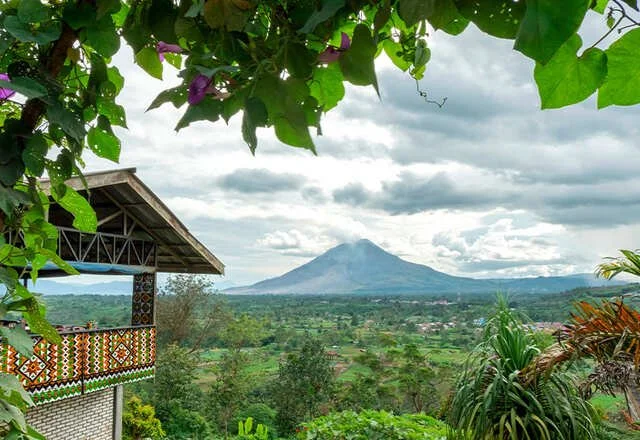
At an elevation of around 1,300 meters above sea level, Berastagi enjoys cool temperatures ranging between 16–24°C. This makes it a refreshing escape from the humid lowlands. The town itself is small but lively, with streets lined by flower stalls, fruit vendors, and traditional Karo houses. The crisp air, misty mornings, and panoramic views of surrounding mountains create a serene backdrop for exploration.
The Highland Atmosphere
Volcano Adventures
Mount Sibayak
Trail & Difficulty: Mount Sibayak is the most accessible volcano in the region. The hike takes about 2–3 hours from the base, making it suitable for beginners.
Highlights: At the summit, you’ll find a steaming crater, sulfur vents, and panoramic views stretching across the highlands. Sunrise hikes are especially popular, offering golden light over the misty valleys.
Tips: Wear sturdy shoes, bring a flashlight if hiking before dawn, and carry water.
Mount Sinabung
Activity: Sinabung is more volatile and has erupted several times in recent years. Climbing is restricted, but the volcano can be admired from safe viewpoints around Berastagi.
Scenery: On clear days, you can see plumes of smoke rising dramatically against the sky—a reminder of nature’s raw power.
Local Markets
Berastagi’s markets are a feast for the senses:
Fruit Paradise: The town is famous for its strawberries, passion fruit, oranges, and avocados. Vendors often offer samples, and the freshness is unbeatable.
Vegetables & Flowers: Highland farms supply crisp cabbages, carrots, and colorful blooms.
Cultural Finds: Look for traditional Karo handicrafts, woven textiles, and handmade souvenirs.
Street Snacks: Try roasted corn, fried bananas, and kacang rebus (boiled peanuts) while strolling through the lively stalls.
The market is not just a shopping spot—it’s a cultural hub where you can observe daily life, interact with locals, and soak in the vibrant atmosphere.
Relaxation & Cultural Experiences
Hot Springs: After a hike, unwind in natural hot springs located near Mount Sibayak. The mineral-rich waters are believed to soothe tired muscles.
Traditional Villages: Visit Karo villages such as Lingga or Dokan to see traditional longhouses and learn about the customs of the Karo people.
Local Cuisine: Berastagi is known for Babi Panggang Karo (Karo-style roast pork), spicy sambals, and hearty soups. Vegetarian travelers will enjoy the abundance of fresh produce.
Best Time to Visit
Year-round appeal: Thanks to its altitude, Berastagi remains cool throughout the year.
Rainy Season (Nov–Mar): Expect frequent showers, so pack rain gear.
Dry Season (Apr–Oct): Ideal for hiking and outdoor activities.
Duration: A 2–3 day stay is perfect to cover the highlights without rushing.
Practical Travel Tips
Getting There: Berastagi is about 2 hours from Medan by bus or private car. Roads are winding but scenic.
Accommodation: Options range from budget guesthouses to mid-range hotels. Homestays offer a more personal experience.
Packing Essentials: Warm jacket, hiking shoes, umbrella, and sunscreen (yes, even in cool climates).
Responsible Travel: Support local farmers and artisans by buying their products, and always respect the environment by keeping trails clean.
Suggested Itinerary
Day 1
Arrive from Medan
Explore Berastagi town and fruit market
Sunset view of Mount Sinabung
Day 2
Early morning hike to Mount Sibayak
Relax in hot springs
Visit a traditional Karo village
Day 3
Leisurely breakfast with fresh fruit
Explore flower stalls and handicraft shops
Depart for Lake Toba or return to Medan
Berastagi is more than just a stopover between Medan and Lake Toba—it’s a destination in its own right. With its cool climate, volcanic adventures, vibrant markets, and rich cultural heritage, Berastagi offers travelers a refreshing and authentic experience of North Sumatra. Whether you’re a hiker, foodie, or culture enthusiast, this highland town promises memories that linger long after you’ve left its misty valleys.